

How to Measure Yoga Leggings for the Right Fit
Quick Summary
To measure yoga leggings fit, wrap a soft tape measure around your narrowest waist point and your fullest hip point, keeping it level. Compare these inch measurements to the brand's size chart, and when they fall in different sizes, choose by hip measurement.
- Measure your waist at the narrowest point, just above the belly button, without sucking in.
- Measure hips about 7 to 9 inches below the waist, at the fullest point.
- Choose the size based on hips, since hips are harder to adjust than the waistband.
- Check the size chart on each product page, because brands vary.
- Test the fit in downward dog, a deep squat and a twist before deciding.
Table of Contents
- Why Measuring Yoga Leggings Fit Matters Before You Order
- How to Measure Your Waist and Hips for Leggings
- Using a Leggings Size Chart in Inches
- How Tight Should Yoga Leggings Fit?
- How to Choose the Right Size of Leggings for Yoga
- Step-by-Step Fit Check Through Yoga Poses
- Your Next Step: Pick a Size and Test It on the Mat
- Frequently Asked Questions
How to Measure Yoga Leggings for the Right Fit
Last Updated: November 15, 2026
Why Measuring Yoga Leggings Fit Matters Before You Order
Getting the right size in yoga leggings starts with a tape measure, not a guess. A common problem is a shopper picking a size they have always worn, then finding the waist rolls down during a forward fold or the fabric pulls tight across the hips in a squat.
Fit matters more in yoga than in most workouts. Poses like downward dog, deep squats and twists stretch leggings in every direction. A pair that is too loose slides down and bunches. A pair that is too tight can feel restrictive and wear out faster along the seams.
Here is what this guide covers:
- How to measure your waist and hips correctly
- How to read a leggings size chart in inches
- What snug, comfortable and too-tight fit actually feel like
- How to choose between sizes
- A simple fit check you can run on your mat
Measurements do not replace a fit test, but they shrink the guesswork. For more on choosing breathable yoga pants overall, see a broader buyer's guide to breathable yoga pants. Start with the numbers, then check how the leggings feel as you move.
How to Measure Your Waist and Hips for Leggings
Good measurements depend on how you take them. Use a soft cloth tape measure, stand relaxed in your underwear or thin clothing, and keep the tape level all the way around.
Measuring Your Waist at the Narrowest Point
Find your natural waist first. It is usually the narrowest part of your torso, just above the belly button. Bend slightly to the side to find the crease if you are not sure.
Wrap the tape around that spot, keeping it parallel to the floor. Breathe normally and do not suck in. Note the number in inches.
Leggings sit at the waist, so this measurement tells you how the waistband will fit. Waistbands with a good elastic band hold best when the measurement lands near the middle of the size range.
Measuring Your Hips at the Fullest Point
Stand with your feet together. Find the widest part of your hips and buttocks, usually about 7 to 9 inches below the waist. Wrap the tape around that fullest point, again keeping it level.
Hips matter most for yoga leggings because squats and lunges stretch the fabric most across that area. If your hip measurement is larger than your waist measurement, which is common, choose your size based on the hips and let the waistband do the rest.
For inseam, measure from the crotch down to where you want the hem to land, usually the ankle. This helps you pick a length that does not bunch or ride up.
Using a Leggings Size Chart in Inches
Most size charts list the body measurement that each size fits. Compare your waist and hip numbers against the chart rather than your usual size.
Use this conversion chart as a general guide. Brands vary, so always check the specific size chart on the product page.
| Size | Waist (inches) | Hips (inches) |
|---|---|---|
| XS | 24 to 26 | 33 to 35 |
| S | 26 to 28 | 35 to 37 |
| M | 28 to 30 | 37 to 39 |
| L | 30 to 32 | 39 to 41 |
| XL | 32 to 34 | 41 to 43 |
Waist (inches)
If your waist and hips fall in different sizes, go with the hip measurement. Hips are harder to adjust with the waistband, and a pair that fits your hips will usually sit well at the waist with a stretchy band.
Some listings show inseam in centimeters too. One inch equals 2.54 centimeters, so a 28-inch inseam is about 71 centimeters (Approximate Conversions from U.S. Customary Measures to Metric | NIST).
How Tight Should Yoga Leggings Fit?
Yoga leggings should feel snug but not squeezing: close enough to the skin that the fabric moves with you, loose enough that you forget you are wearing them in a resting pose. Pocketed styles change how the waistband and fabric sit, so you can read a fit guide covering women's yoga leggings with pockets.
Camel toe or front seam pressure. This usually comes from a rise that is too short or a gusset that is cut too narrow, not from sizing up.
Excess fabric bunching behind the knees or at the ankle. Bunching at the knee is almost always an inseam that is too long for your leg length, not a size problem.
Sheer fabric over the seat or thighs in a squat. Sheerness is a function of fabric weight and stretch percentage, not size alone.
Deep red marks or numbness at the waist. This is a true too-tight signal.
Seams that pull or feel ridge-like along the inner thigh. Seam strain points to a hip measurement that is larger than the size allows.
Fabric content changes all of this. Seamless knit blends with nylon and elastane offer good stretch, so a stretchy fabric can feel fine in a size that is slightly snug on the chart.
How to Choose the Right Size of Leggings for Yoga
When your measurements fall between two sizes, choosing is a matter of how you practice and how the fabric behaves.
Consider sizing up if you:
- Practice deep squats, lunges or wide-legged poses often
- Want a looser, more relaxed feel
- Are between sizes and the fabric has little stretch
Consider sizing down if you:
- Want a sleeker, more compressed fit for hot yoga or intense workouts
- Are between sizes and the fabric has strong stretch recovery
- Prefer leggings that stay close to the body
Here is a practical way to decide. Put on the size you measured closest to, and do three things: squat to the floor, fold forward, and rise into a standing pose. If the waist stays put and nothing pinches, that size works. If the waist slides or the seams pull hard, try the other size.
Do not size up just to get more room in the waist. A waistband that is too big is harder to fix than a pair that is a bit snug in the legs.
Step-by-Step Fit Check Through Yoga Poses
A tape measure tells you where to start; a movement test tells you whether the leggings actually work. Each pose below loads a different part of the garment, so a pair that passes one check can still fail another. Run the full sequence in one session and judge each pose on its own.
-
Mountain pose (tadasana). Stand with feet hip-width apart and arms at your sides. The waistband should sit level all the way around, with no gap at the back and no digging at the front. The fabric should lie flat from waist to ankle with no horizontal wrinkles across the front of the thigh. Wrinkles that fan out from the crotch usually mean the rise is too short for your torso.
-
Downward-facing dog. Press into the pose and hold for five breaths. This is the strongest test of waistband security because gravity pulls the fabric toward your head. The band should stay at your natural waist without sliding toward your ribs. If it creeps up, the waistband elastic is too loose or the rise is too long for your torso. Also check the back of the knee: fabric that bunches there will chafe in a flow.
-
High lunge, both sides. Step one foot forward and lower the back knee if needed. Watch the front thigh and hip crease. The fabric should stretch smoothly across the hip without pulling the waistband down on the front-leg side. A waistband that dips on one side points to a hip measurement that is larger than the size allows, not a stitching defect.
-
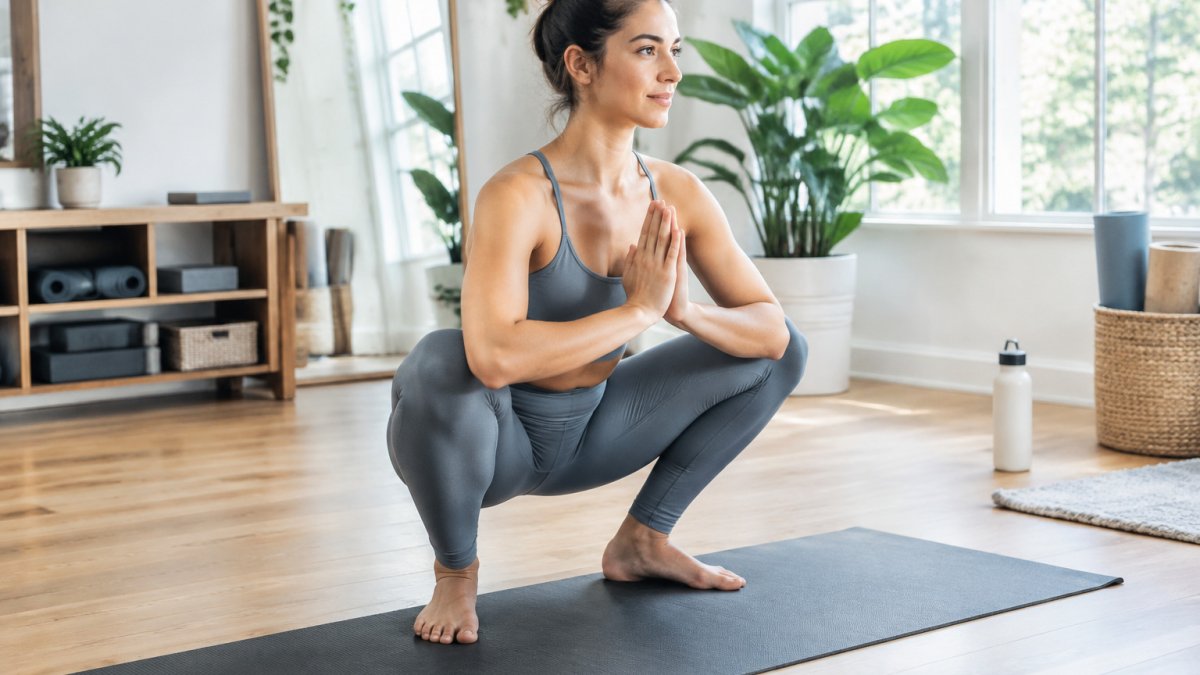
Goddess squat (wide-legged squat). Turn toes out and sink your hips. This is the best test for sheerness and for seam stress. Face a mirror or use your phone camera to check that the fabric over the seat and inner thighs does not turn transparent when stretched. Run a hand along the inner-thigh seam: if you can feel the seam ridge pressing hard, the size is too small for your hip measurement.
-
Seated or standing twist. Rotate your torso and hold. The waistband should rotate with your body and return to level when you release. A band that stays put while your torso turns is too tight; one that twists out of place and stays there has lost recovery.
-
Supine knee-to-chest. Lie on your back and hug both knees in. The waistband should stay flat against your lower back with no gap. A gap here means the back rise is too short, which is common in leggings cut for a shorter torso.
-
Savasana roll-out. Lie flat and roll from side to side. Check for twisting at the waist and for any bunching behind the knees. Then stand up and look at the leggings before you take them off: deep creases at the hip flexors and a stretched-out waistband are signs the fabric is working harder than its recovery can handle.
Watch out: Do not judge fit from a standing mirror check alone. Most waistband slip, sheerness, and seam strain only appear once the fabric is loaded in a fold, squat, or twist, so a pair that looks perfect standing still can fail every movement test.
Your Next Step: Pick a Size and Test It on the Mat
You now have the tools to measure yoga leggings fit with confidence. Take your waist and hip numbers, compare them to the size chart, and choose the size that matches your hips first. Then run the fit check above in your first session.
If you are shopping now, browse our women's seamless high-waist leggings for yoga and gym, which feature an elastic waistband, a seamless knit and a true-to-size fit. Our high-waist denim-look leggings and high-waisted tummy control yoga shorts are good alternatives if you want a different length or style. Reach out with any sizing questions before you buy.
Frequently Asked Questions
How do you measure yourself for yoga leggings?
Use a soft measuring tape held parallel to the floor. Measure your waist at its narrowest point, usually just above the navel, and your hips at the fullest part of your seat. Keep the tape snug but not tight, and write down both numbers in inches. Compare them against the brand's size chart rather than your usual clothing size, since leggings sizing varies between manufacturers. Repeat each measurement twice to confirm accuracy before you order.
How tight should yoga leggings fit?
Yoga leggings should feel snug and supportive without digging into your skin. The waistband should stay in place when you bend forward, and the fabric should move with you through a squat without becoming sheer or restrictive. Some compression is expected, since the stretch fabric is designed to hold its shape. If you see marks that linger after removal, or the leggings roll down or ride up during poses, the fit is likely too tight or too loose.
Should you size up or down in yoga leggings?
If your measurements fall between two sizes, choose based on how you want the leggings to feel during practice. Sizing down gives more compression and less slipping, while sizing up can reduce tightness but may cause bunching at the waist or knees. Consider the fabric stretch listed in the product details: higher-elastane blends recover well from a slightly smaller size, while looser knits may need your standard size.
How can you tell if yoga leggings fit properly?
Test the leggings with a movement check before you commit. Perform a squat, a forward fold, a lunge, and a twist. The fabric should stay opaque, the waistband should remain flat, and the leggings should not slide down or pinch at the knees or hips. Check that the length matches your inseam so the hem sits where you want it. If the leggings pass these checks in your home space, they will usually hold up in class.
