

How to Choose Breathable Yoga Pants: A Buyer's Guide
Last Updated: November 8, 2026
Quick Summary
Choose breathable yoga pants by reading the fiber label first: a nylon-spandex blend moves sweat away from skin and dries fast, while cotton stays wet and clammy. Match fabric weight to your practice, choosing lightweight quick-dry knits for hot yoga and mid-weight knits for cool rooms.
- Lower GSM fabric weight means lighter and airier; higher GSM means denser and more supportive.
- For hot yoga, pick the lightest quick-dry knit with seamless or flatlock seams and skip cotton entirely.
- Test breathability at home by holding fabric to light, breathing through it, and doing a squat.
- Balance light knits with fabric density, stretch recovery, and lining to stay opaque in forward folds.
- Two pairs, one light and one mid-weight, cover more ground than buying one pair for every class.
Table of Contents
- Start With Fabric: The Most Breathable Fabric for Leggings
- Match Breathability to Your Practice: Hot Yoga, Summer, and Everyday
- Lightweight Yoga Pants for Summer: What to Look For
- Yoga Pants for Hot Yoga: Sweat, Airflow, and Quick-Dry Fabrics
- The Best Breathable Yoga Pants: A Quick Comparison
- Balance Airflow With Opacity and Support
- Test Breathability at Home Before You Commit
- Shop Warrior Wearables for Breathable Yoga Pants
- Frequently Asked Questions
Start With Fabric: The Most Breathable Fabric for Leggings
A nylon-spandex blend is generally a good choice for breathable leggings, and cotton is often slower to dry. Nylon moves sweat away from your skin and dries fast, while spandex adds the stretch you need for deep poses. Cotton soaks up sweat and stays wet, which feels heavy and clammy mid-flow.
Shoppers often fixate on color and cut while ignoring the label. That label decides how the pants feel in a hot room and how long they last.
Here is how the main fabrics stack up:
- Nylon blends: Light, cool, quick to dry. Best all-around pick for sweaty sessions.
- Polyester blends: Durable and affordable. Slightly less soft against the skin.
- Spandex: The stretch partner, usually blended in at a small share. Gives four-way stretch and shape recovery.
- Cotton: Soft and cozy, but slow to dry. Fine for gentle, cool-room practice.
- Natural fibers like bamboo: Soft and breathable, though they can stretch out over time.
A good rule: if you sweat hard, go synthetic. If you practice slow and cool, cotton can work.
How to Read a Fabric Label
Start with the fiber percentages, not the marketing words on the tag. A higher nylon share with a modest spandex share usually means a smooth, stretchy, fast-drying pair.
Then check the fabric weight, listed as GSM (grams per square meter). Lower GSM means lighter and airier. Higher GSM means denser and more supportive. For summer and hot yoga, lean lighter. For cooler studios and everyday wear, a mid-weight knit holds its shape better.
Watch out: a label that says "breathable" without fiber details tells you nothing. Look for the numbers.
For a deeper look at sweat-wicking options, see our guide to the best moisture wicking yoga leggings.
Match Breathability to Your Practice: Hot Yoga, Summer, and Everyday
Breathability is not one setting.
Use this decision framework to match fabric weight and construction to your real practice:
| Practice or Setting | Sweat Level | Fabric Priority | Weight | Construction Cues | What to Avoid |
|---|---|---|---|---|---|
| Hot yoga (heated room) | High | Nylon-spandex, quick-dry | Lightweight | Seamless or flatlock seams, mesh panels at back of knee or waistband | Cotton, thick knits, tight compression |
| Vigorous vinyasa or power flow | High | Nylon or polyester blend | Lightweight to mid-weight | Four-way stretch, gusseted crotch, seamless inner thigh | Dense cotton, restrictive waistbands |
| Summer outdoor practice | Moderate to high | Nylon or polyester blend | Lightweight | Loose leg or straight cut, breathable waistband | Dark, dense fabrics that absorb heat |
| Cool-room flow or yin | Low | Nylon-spandex or soft blend | Mid-weight | Smooth face, gentle compression | Overly thin knits that feel cold |
| Restorative or meditation | Low | Soft cotton or blend | Any weight | Soft waistband, minimal seams | Tight compression, stiff weaves |
| Everyday wear and travel | Low to moderate | Soft blend with stretch | Mid-weight | Flat waistband, opaque knit | Stiff, non-stretch weaves |
Heated rooms call for the lightest, fastest-drying fabric you can find, plus construction details that reduce chafe when you are drenched.
Sweat level matters as much as room temperature. If you run hot even in a cool studio, lean toward the hot-yoga column.
Climate adds another layer. In humid heat, quick-dry fabrics matter more because sweat evaporates slowly.
Pose demands also shape the choice.
The mistake we see most: buying one pair for every class. Two pairs, one light and one mid-weight, covers far more ground.
For a deeper look at sweat-wicking options, see our guide to the best moisture wicking yoga leggings.
Lightweight Yoga Pants for Summer: What to Look For
Lightweight yoga pants for summer should feel cool the moment you pull them on and stay light when you sweat. Look for a thin knit, a breathable blend, and a cut that lets air move.
Here is what earns a spot in your summer drawer:
- Low fabric weight: A light knit beats a dense one in heat.
- Nylon or polyester blend: Dries fast and resists cling.
- Elastic waistband: Sits flat and does not dig in.
- Loose or straight leg options: More airflow than a tight legging.
- True-to-size fit: Snug waistbands trap heat.
Our high waist wide leg yoga pants are built from a 75% nylon and 25% spandex blend with a cool, silky feel and a draped straight leg. They suit summer daily wear, travel, and light practice. Just note they have no pockets and come in a relaxed shape, so they are not a compression pick.

Watch out: very thin fabrics can turn sheer when you bend. Check opacity before you commit.
Yoga Pants for Hot Yoga: Sweat, Airflow, and Quick-Dry Fabrics
Yoga pants for hot yoga need one job above all: move sweat off your skin fast. In a heated room, a fabric that holds moisture will feel heavy within minutes.
Quick-dry nylon blends win here. They pull sweat to the surface, where it evaporates, and they keep their shape through a full class. Seamless construction also helps by cutting down on chafe points when you are drenched.
Our tie dye yoga shorts use a high-elastic, quick-dry build made for sweaty sessions, running, and gym work. They give you airflow where leggings trap heat.

A few hot-room habits that help:
- Choose the lightest knit you can find.
- Skip cotton entirely.
- Bring a towel and a spare top.
- Rinse your gear soon after class to keep odor down.
Sensitive skin? Seamless, smooth-face fabrics reduce rubbing, and rinsing right away keeps bacteria from building up in the fibers.
The Best Breathable Yoga Pants: A Quick Comparison
The best breathable yoga pants depend on your practice. Here is how a few options compare on the details listed.
| Pair | Fabric | Weight and Feel | Best For | Price |
|---|---|---|---|---|
| High Waist Wide Leg Yoga Pants | 75% nylon, 25% spandex | Light, cool, silky | Summer, travel, lounge | $33.99 |
| Seamless High Waist Leggings | Nylon and elastane | Light, smooth, quick-dry | Hot yoga, gym | $57.99 |
| Impact Flares Seamless Leggings | Nylon and elastane | Light, seamless, flared | Studio flow, gym | $28.99 |
| Butterlift Ankle Yoga Pants | Polyester | Mid-weight, soft | Lounge, travel | $148.99 |
Price
The seamless leggings have a high waist and a seamless build. The wide leg pair is a relaxed option for everyday wear. The flares offer a flared shape with a seamless feel.
Each pair has a trade-off. The wide leg has no pockets and a relaxed fit. The seamless leggings run ankle length with no pockets. The flares are a flared cut, not a tight compression legging.
Balance Airflow With Opacity and Support
Breathable does not have to mean see-through. The trick is balancing a light knit with enough density and stretch recovery to stay opaque when you move, and enough support to feel held without trapping heat.
Three things keep a light pair squat-proof:
- Fabric density: A slightly denser knit blocks light without feeling heavy. Look for a tight, uniform knit rather than a loose, open one.
- Stretch recovery: Good spandex snaps back and holds its shape. If the fabric stays stretched after you pull it, it will likely bag and turn sheer in motion.
- Lining or double layers: Extra coverage at the seat and knees adds opacity without adding much weight.
Support works the same way. A high waistband with gentle compression holds everything in place without squeezing. Too much compression traps heat, which defeats the point.
Use this pose-and-movement framework to weigh airflow against opacity and support:
| Pose or Movement | What It Tests | Airflow Priority | Opacity and Support Priority | Practical Choice |
|---|---|---|---|---|
| Forward folds and seated twists | Fabric pressed against skin, stretch recovery | Moderate | High | Denser knit with good spandex recovery; check seat and knee opacity |
| Standing poses and balances | Waistband stay-put, hip coverage | High | Moderate | High waistband with flat seams; avoid loose waistbands that roll |
| Inversions and wide-leg poses | Sheerness at seat and inner thigh | Moderate | High | Lined or double-layer gusset; test in a mirror before buying |
| Hot flow with heavy sweat | Cling, chafe, heat retention | High | Moderate | Lightweight quick-dry knit with seamless inner thigh |
| Restorative and floor work | Softness, pressure points | Low | Moderate | Soft mid-weight knit with minimal seams |
A common pattern is that shoppers judge opacity by holding fabric to the light in a store, then discover sheerness only in a forward fold. Test the way you will move.
Watch out: very thin, high-airflow knits can feel great in a hot room but turn sheer under stretch.
If you want pants that last through heavy use, our guide to durable yoga pants for beginners breaks down what holds up and why. And if pockets matter for fit and stay-put wear, see our fit guide for leggings with pockets.
Test Breathability at Home Before You Commit
You can test breathability at home in about a minute, before you ever sweat in a pair. Hold the fabric up to a window and watch how much light passes through. Then breathe through it.
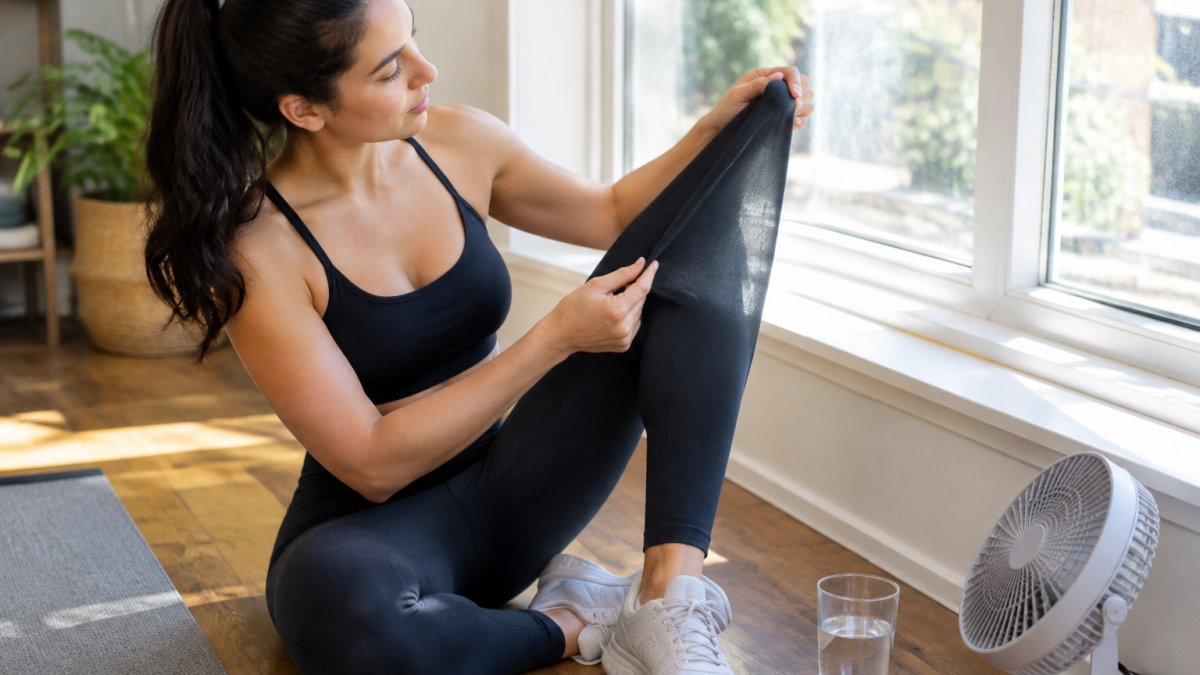
Here is the simple test:
- Hold it to the light. More light through the knit usually means more airflow.
- Breathe through the fabric. If air passes easily, it will vent heat.
- Stretch it and check again. Look for sheerness at the seat and knees.
- Dampen a corner. Fast-drying fabric feels mostly dry in minutes.
- Do a squat and a forward fold. Watch for cling, ride-down, and show-through.
This is not lab science, but it separates a genuinely airy pair from a dense one fast. A common mistake is judging fabric by touch alone. Soft does not always mean breathable.
Shop Warrior Wearables for Breathable Yoga Pants
Finding breathable yoga pants comes down to three checks: read the fiber label, match the weight to your practice, and test opacity before you commit.
At Warrior Wearables, you can find a range of leggings and lounge pants in one place.
Start with one light pair for sweaty days and one mid-weight pair for everything else. Search Warrior Wearables for breathable yoga pants and build a drawer that works for every class.
Ready to upgrade your practice wardrobe? Warrior Wearables makes it easy to find breathable yoga pants that fit your flow, with quick-dry fabrics, seamless comfort, and friendly help if you are unsure about sizing.
Frequently Asked Questions
What is the most breathable fabric for leggings?
Nylon and spandex blends with a lightweight knit tend to breathe better than thick cotton or dense polyester. Look for a lightweight knit with good stretch. A 75% nylon and 25% spandex blend, like the one in Warrior Wearables' wide-leg yoga pants, is one option to consider. Avoid unlined cotton for sweaty sessions because it holds moisture and dries slowly.
How do I know if yoga pants are breathable?
Hold the fabric up to a light source and see how much passes through. Stretch the waistband and thigh area, then blow through the fabric to feel resistance. If air moves easily, it will breathe on your body. You can also check the label for terms like quick-dry, moisture-wicking, or lightweight knit. A pair that feels cool and smooth against your skin in the store is usually the better pick for breathable yoga pants.
Are lightweight yoga pants a good choice for summer?
Yes. Lightweight yoga pants for summer let heat escape and dry faster after a sweaty session. Look for a light knit and a cut that does not feel tight behind the knee. Wide-leg and flare styles add airflow around the legs. Pair them with a quick-dry top and you have a summer outfit that handles humidity without clinging.
Are cotton or synthetic yoga pants more breathable?
Cotton breathes well in dry conditions but holds sweat and dries slowly, which makes it a poor fit for hot yoga. Synthetics like nylon and spandex move moisture away from the skin and dry faster. For most practices, a nylon-spandex blend is the better choice. If you prefer natural fibers, look for a cotton blend with a small amount of spandex and save it for gentle, cool-room sessions.
