

Women's Yoga Leggings With Pockets: A Fit Guide
Table of Contents
- Why Pockets Matter in Women's Yoga Leggings
- High-Waisted Leggings With Pockets: The Foundation for Support
- Yoga Pants With Side Pockets: Placement and Usability
- Squat-Proof Yoga Leggings: Coverage and Opacity Testing
- How Yoga Leggings Should Fit: Waistband to Inseam
- Fabric Composition: Four-Way Stretch and Moisture-Wicking
- Testing Your Leggings Before Committing
- Care and Durability: Keeping Pockets and Fabric Intact
- Frequently Asked Questions
Last Updated: October 21, 2026
Why Pockets Matter in Women's Yoga Leggings
Pockets in yoga leggings solve a genuine problem: where do you put your phone, keys, or ID during practice? Without them, you're either leaving essentials on the studio floor or stuffing items into your sports bra. A well-designed pocket keeps your hands free and your mind focused on your practice instead of worrying about your belongings.
The right pocket placement makes the difference between convenience and distraction. Side pockets sit naturally along your thigh, distributing weight evenly so you won't feel unbalanced during warrior poses or lunges. Hidden pockets, often integrated into the waistband, keep items completely secure without creating visible bulges. When you're moving through a flow, the last thing you need is your phone sliding down your leg mid-downward dog.
At Warrior Wearables, we stock high-waisted yoga leggings with pockets designed specifically for movement.
High-Waisted Leggings With Pockets: The Foundation for Support
High-waisted leggings sit at your natural waist, covering your midsection completely. This design provides tummy control without compression that restricts breathing, which matters during pranayama and deep stretching. The higher waistband also keeps the leggings anchored during inversions and standing sequences.
When a waistband sits too low, it slides down as you move through poses. You'll spend more time pulling them up than focusing on alignment. High-waisted styles eliminate this frustration. The wider waistband also distributes pressure evenly across your abdomen, preventing that uncomfortable digging sensation you get with low-rise designs.
The combination of high-waisted fit with side pockets creates a stable platform for movement. Your phone stays in place, your waistband stays in place, and you stay in place. Look for leggings with a structured elastic waistband that holds its shape through dozens of washes. The High-Waist Fleece-Lined Yoga Pants With Pockets For Women from Warrior Wearables feature a wide elastic waistband for full-coverage support.

Yoga Pants With Side Pockets: Placement and Usability
Side pockets positioned along the outer thigh are the most practical design for yoga. They keep items accessible without creating bulk across your midsection or back, which means no distraction during core work or backbends. The weight distributes naturally along your leg rather than pulling at your waistband.
Pocket Depth and Phone Storage
A functional yoga pocket needs to hold a modern smartphone securely. Most phones today are around 3 by 6 inches. Your pocket should be at least 4-5 inches deep to accommodate this without the phone shifting during movement. Shallow pockets (under 3 inches) are essentially useless, your phone will slip out during inversions or forward folds.
Test the pocket depth with your phone before committing. Some leggings have pockets that look generous but taper at the top, creating a false sense of capacity. A truly functional pocket maintains consistent depth from opening to bottom. You want your phone sitting flush against your thigh, not perched at the edge where it can slide out.
Avoiding Bulk During Movement
The pocket itself should add minimal bulk. Look for designs that integrate the pocket seam into the overall pant construction rather than adding extra fabric layers. When you squat or lunge, the pocket shouldn't create a visible ridge or pull the fabric tight around your thigh.
Many practitioners worry that side pockets will feel heavy or unbalanced. In practice, a single phone (roughly 6 ounces) distributed along your outer thigh creates negligible imbalance. Your body adjusts naturally. The real issue is poor pocket construction that bunches fabric or creates uncomfortable pressure points.
Squat-Proof Yoga Leggings: Coverage and Opacity Testing
Squat-proof fabric means the leggings remain opaque when you bend forward, squat, or hold a downward dog. This requires adequate fabric weight and a tight weave. Many lightweight leggings fail this basic test, becoming see-through exactly when you need coverage most.
Test opacity before purchasing. Bend forward, squat deeply, and hold the position for several seconds. Look at yourself from behind in a mirror. If you can see the outline of your undergarments or skin tone through the fabric, the leggings aren't squat-proof.
Fabric weight matters here. Leggings made from thin polyester blends often fail opacity tests. Higher quality blends with adequate spandex content (typically 12-15%) maintain their structure and opacity through repeated movement. The CRZ YOGA Butterlift Ankle Yoga Pants for Women from Warrior Wearables are made of polyester.

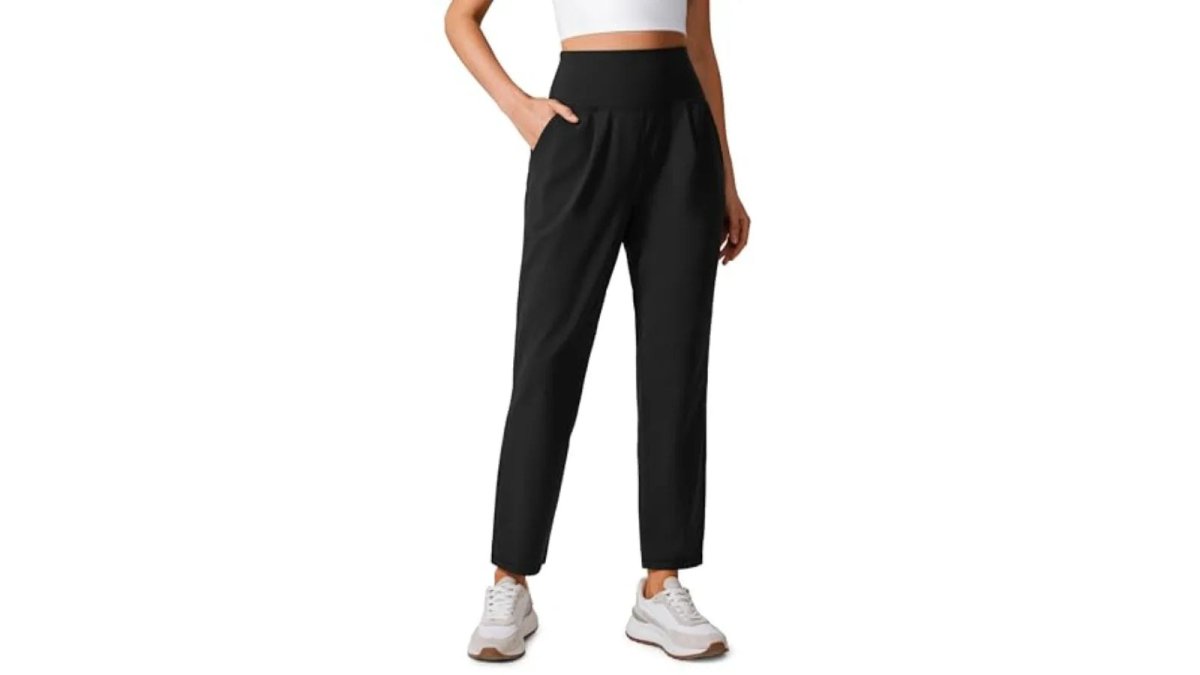
How Yoga Leggings Should Fit: Waistband to Inseam
Proper fit determines whether leggings feel like a second skin or a constant annoyance. Your waistband should sit at your natural waist without gapping or rolling down. Your inseam should reach your ankle without pooling at your feet or creating exposed gaps when you stretch.
Waistband Fit and Tummy Control
A well-fitting waistband contacts your skin without digging in. You should be able to fit one finger comfortably inside the waistband when standing. If you can fit more than two fingers, the waistband is too loose and will slide down during practice. If you can't fit a finger, the waistband is too tight and will restrict breathing.
The waistband should provide gentle compression without constriction. Tummy control comes from the fabric structure, not from squeezing. Quality leggings use a combination of waistband design and strategic fabric placement to smooth your midsection without making you feel like you're wearing a corset.
High-waisted styles typically offer more tummy control than mid-rise designs because they cover more of your abdomen. The wider coverage distributes compression evenly rather than concentrating it in a narrow band. This is why high-waisted leggings are standard for yoga, they provide support without discomfort.
Inseam Length and Ankle Coverage
Your inseam should reach the top of your ankle bone, covering your heel when you're standing. When you sit in lotus pose, the inseam should still reach your ankle. If the leggings are too short, you'll see a gap between the fabric and your ankle during forward folds. If they're too long, you'll get bunching at your feet.
High-Waist Fleece-Lined Yoga Pants With Pockets For Women →
Length varies significantly across brands and sizes. A 28-inch inseam fits most people between 5'4" and 5'7", while taller practitioners need 30-32 inches. Shorter people often need 26-27 inches. Don't assume your usual pant size translates directly to leggings, check the inseam measurement rather than just the size number.
Fabric Composition: Four-Way Stretch and Moisture-Wicking
Quality yoga leggings use a blend of polyester and spandex. Polyester provides durability and moisture-wicking properties, while spandex (typically 10-15% of the blend) creates the stretch and recovery that lets the fabric return to its original shape after movement.
Four-way stretch means the fabric stretches in all directions: lengthwise, widthwise, and diagonally. This matters because yoga involves movement in multiple planes. When you move through a vinyasa flow, your legs move forward, back, and side to side.
Moisture-wicking fabric pulls sweat away from your skin so it evaporates rather than sitting against your body. This keeps you comfortable during vigorous practice and prevents that clammy feeling that comes with cotton or poorly designed synthetic blends.
Look for fabric that feels smooth and soft against your skin. Buttery soft fabric isn't just a marketing term, it describes a specific hand-feel that comes from high-quality polyester blends and proper finishing. Rough or stiff fabric often indicates lower quality materials or inadequate finishing processes.
Testing Your Leggings Before Committing
Before you fully commit to a pair of yoga leggings, put them through a movement test. This doesn't require a full yoga class, just 10 minutes of basic poses will reveal fit issues and comfort problems.
Start by wearing them around your home for a few hours. Walk up and down stairs, sit on the floor, bend forward. Does the waistband stay in place? Do the pockets feel secure? Does the fabric feel comfortable against your skin?
Then move through basic poses: downward dog, child's pose, warrior one, and a deep squat. Hold each pose for at least 30 seconds. Notice whether the leggings shift, whether you feel restricted, whether the pockets stay secure. Pay attention to opacity, bend forward and check whether you're seeing any transparency.
If the leggings pass this informal test, they'll likely work well in a full class. If you notice problems during this short test, they'll only get worse during 60 minutes of sustained practice.
| Test | What to Check | Pass Criteria |
|---|---|---|
| Waistband fit | Stays in place during movement | No rolling or sliding |
| Pocket security | Phone stays in place during poses | No shifting or sliding out |
| Opacity | No transparency when bending | Full coverage, no see-through |
| Comfort | No chafing or irritation | Smooth feel against skin |
| Inseam length | Reaches ankle without bunching | Proper coverage, no gaps |
Care and Durability: Keeping Pockets and Fabric Intact
Proper care extends the life of your yoga leggings and keeps pockets functioning well. Machine wash in cold water with similar colors. Avoid fabric softener, which can degrade the moisture-wicking properties of the fabric.
Turn leggings inside out before washing to protect the outer surface from friction and pilling. This is especially important for pockets, which can snag on other garments during the wash cycle.
Avoid bleach and harsh detergents. These break down the polyester and spandex fibers, causing the fabric to lose elasticity and color. A gentle detergent designed for athletic wear is ideal.
Store leggings folded rather than hanging. The weight of hanging leggings can stretch out the fabric over time, particularly at the waistband.
The High-Waist Fleece-Lined Yoga Pants With Pockets For Women from Warrior Wearables are crafted for comfort, coverage, and everyday versatility.

Finding the right women's yoga leggings with pockets requires attention to fit, fabric quality, and pocket design. The leggings you choose should support your practice, not distract from it.
Frequently Asked Questions
What should you look for in yoga leggings with pockets?
Prioritize four-way stretch fabric, a high waistband for support, and side pockets positioned low enough to avoid bulk during forward folds. Check that the material is squat-proof by testing opacity in bright light. Look for moisture-wicking properties if you practice hot yoga, and ensure the pocket depth accommodates your phone without creating a noticeable bulge. Warrior Wearables' High-Waist Fleece-Lined Yoga Pants deliver all these features at $45.99, with secure welt pockets and tummy control.
How should yoga leggings fit to stay in place during practice?
The waistband should sit at your natural waist without gaps or rolling down, with enough compression to provide tummy control without restricting breathing. The inseam should reach your ankle with minimal bunching when you squat or fold forward. Side seams should align with your leg, and the fabric should have at least four-way stretch to move with your body. If leggings slip during downward dog, the waistband is too loose or the fabric lacks sufficient grip.
Are side pockets or waistband pockets better for yoga?
Side pockets are superior for yoga because they distribute weight evenly along your leg and stay out of your way during forward bends and twists. Waistband pockets can dig into your stomach during compression poses and create visible bumps. Side pockets positioned mid-thigh or lower provide hands-free storage without interfering with movement, making them ideal for keeping your phone, keys, or ID secure throughout your practice.
What fabric is best for yoga leggings with pockets?
Look for polyester blends with spandex (typically 88% polyester and 12% spandex) that deliver four-way stretch, moisture-wicking, and durability. This combination provides enough give to move through poses while maintaining shape and opacity. Fleece-lined options add warmth for outdoor yoga or cooler studios, while lighter blends work better for hot yoga. Avoid 100% cotton, as it absorbs sweat and lacks the stretch needed for active practice.