

Signs of High Quality Athletic Fabric to Look For
Quick Summary
High quality athletic fabric is built from a polyester or nylon blend with elastane for stretch, and it moves sweat away from the skin while letting air through. Its knit should stay opaque and hold its shape through hard training, with flatlock or bonded seams that limit chafing.
- Look for a clear fiber breakdown, such as polyester or nylon blended with elastane, rather than vague terms like premium.
- Choose flatlock or bonded seams to reduce chafing, with stretch panels placed where you move most.
- Avoid cotton for workouts, since it absorbs sweat and stays wet and heavy during exercise.
- Test stretch recovery by pulling fabric to about 1.5 times its width, holding 10 seconds, then releasing.
- Wash in cool or warm water, skip fabric softener, and hang to dry to protect elastane and wicking.
Table of Contents
- What Makes Athletic Fabric High Quality
- Fabric Composition and Fiber Types Explained
- Moisture-Wicking and Breathability: What to Look For
- Fabric Weight, GSM and Opacity
- Stretch, Recovery and Durability Over Time
- How to Test Workout Fabric Quality at Home
- Care Habits That Keep Athletic Fabric Performing
- Choosing Your Next Workout Top or Bottom
- Frequently Asked Questions
What Makes Athletic Fabric High Quality
Last Updated: November 2, 2026
Athletic fabric earns its keep by moving sweat away from the skin, letting air through, and holding its shape through hard training. Shoppers who know what to check before buying tend to end up with pieces they keep for a long time.
Quality starts with the fiber and the knit. Most performance pieces use polyester or nylon for quick drying, blended with elastane or spandex for stretch.
Fit and construction matter just as much as the cloth. Flatlock or bonded seams reduce chafing, and strategic paneling places stretch where you move most. A well-made garment will feel smooth against the skin at the seams, not bulky or scratchy.
Weight and feel tell you a lot before you wear the piece. A lightweight knit suits hot-weather training, while a heavier construction offers more coverage and support for lifting or cooler sessions. Run your hand over the fabric: it should feel soft without feeling flimsy.
- Fiber blend: polyester or nylon with elastane for stretch
- Seams: flatlock or bonded construction to limit chafing
- Knit: tight, even structure that resists sheerness
- Fit: stretch placed where you move, with a secure hem
Common mistake: judging performance by thickness alone. A thin fabric can still be opaque and durable if the knit is dense, while a thick one can trap heat if it lacks ventilation.
Fabric Composition and Fiber Types Explained
Polyester is the workhorse of athletic apparel: it dries quickly, resists shrinking, and holds color through repeated washing. Nylon offers a softer hand and strong abrasion resistance, which is why it often appears in leggings and high-wear areas. Neither fiber stretches much alone, so manufacturers add elastane, sold under brand names like Lycra, for recovery after stretching.
A typical high-quality blend pairs a base fiber with a small share of elastane. The exact percentages vary by product, so check each listing. The X-TIGER Men's Breathable Quick Dry Reflective Cycling Jersey, for example, is made from 87% polyester and 13% spandex, a breathable stretch fabric that dries quickly and stretches as you ride.
Cotton is the fiber to be wary of for workouts. It absorbs sweat and stays wet, which is why it feels heavy and cold during exercise.
The article's key fiber facts are easy to compare at a glance:
| Fiber | Key trait | Note |
|---|---|---|
| Polyester | Dries quickly | Resists shrinking and holds color through washing |
| Nylon | Softer hand | Strong abrasion resistance, common in leggings |
| Elastane | Stretch recovery | Sold under brands like Lycra |
| Cotton | Absorbs sweat | Stays wet and heavy during exercise, so avoid for workouts |
Moisture-Wicking and Breathability: What to Look For
Moisture-wicking describes how a fabric moves sweat from the skin to the outer surface to evaporate; breathability describes how much air passes through. The two work together: a fabric that wicks well but traps air can still feel clammy, and a breathable mesh that holds moisture will leave you soaked.
Look for mesh panels under the arms and along the back, which are the zones that sweat most. The ROCKBROS Summer Cycling Short Sleeve Jersey features 3D mesh fabric with a diamond pattern texture. The Ykywbike Men Cycling Jersey features a polyester-elastane knit with built-in side and back meshes.

Quick-dry claims are easy to make and hard to verify. The most reliable signal is a fiber blend built for drying, combined with ventilation placed where you sweat.
Fabric Weight, GSM and Opacity
GSM, or grams per square meter, measures how heavy a fabric is for its area. Lower GSM means a lighter, more airy knit suited to summer training. Higher GSM means more density, which usually brings better opacity and more structure. Many performance tops sit in a lightweight range, while leggings and compression pieces tend to be denser.
Opacity matters most in leggings and light-colored bottoms. A squat-proof fabric holds together when you bend, and a sheer one reveals more than you intend. Hold the garment up to a window: if you can see your hand clearly through it, the knit is too thin for demanding movement.
Some listings give weight in grams for a size rather than GSM. Both help you compare, so use whichever the seller provides and check it against the fabric's feel.
Stretch, Recovery and Durability Over Time
Stretch lets a garment move with you, and recovery brings it back to its original shape. A fabric with good four-way stretch moves in every direction and returns without sagging at the knees or elbows. Test this in the store or on arrival: pull the fabric gently and release. It should snap back quickly.
Durability shows over months, not days. Watch for pilling, a sign the surface fibers are breaking down, and for loss of elasticity after repeated washing. A quality knit resists both. The Quick Dry Compression T Shirt For Sports And Gym Wear is made from polyester knit with quick-dry properties.
How to Test Workout Fabric Quality at Home
Fabric descriptions often use words like "premium," "technical," and "engineered," which are hard to measure.
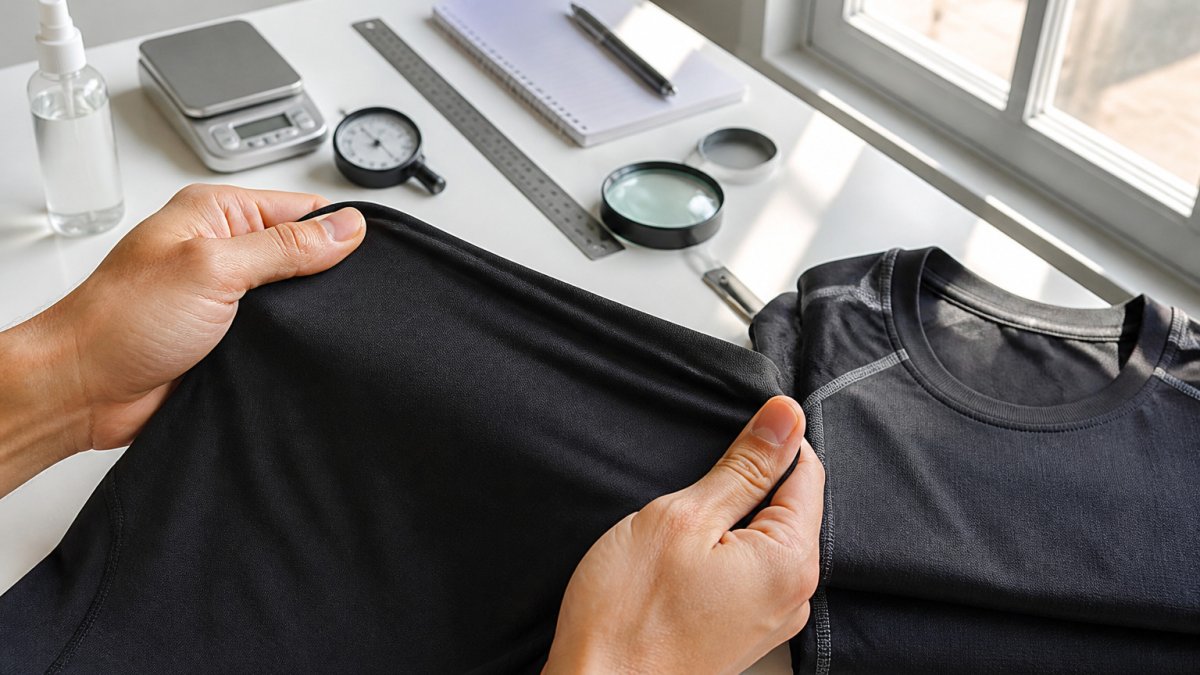
1. Stretch and recovery test. Grab fabric at the thigh or shoulder with both hands and pull it to roughly 1.5 times its resting width.
2. Opacity and squat-proof test. Hold the fabric up to a bright window or lamp and see how much light passes through.
3. Drying-speed test. Wet a palm-sized patch on the inside of a hem with about a teaspoon of water.
4. Pilling and surface test. Rub the fabric against itself, inner thigh against inner thigh, about 20 times with moderate pressure, then inspect under good light.
X-TIGER Men's Breathable Quick Dry Reflective Cycling Jersey →
**5.
6. Colorfastness test. Dampen a white paper towel or cotton swab and rub it firmly across a hidden area such as the inside of a hem for about 10 seconds.
7. Airflow check. Hold a single layer of fabric close to your mouth and breathe through it. You should feel some resistance but still move air.
These checks will not replace lab measurements, and no single test is definitive.
Care Habits That Keep Athletic Fabric Performing
Performance fabric is engineered, and how you wash it either preserves or quietly undoes that engineering.
Heat is the enemy of elastane. The stretch in a performance garment comes from elastane (often sold as Lycra or spandex), which degrades faster than the base fiber.
Fabric softener coats the fibers. Softeners deposit a waxy layer that is great for cotton towels and terrible for wicking knits.
Detergent choice matters more than most people think. Standard detergents are fine, but heavy-duty formulas with optical brighteners and enzymes can be harsh on elastane and on antimicrobial or water-repellent finishes.
Wash soon after sweating. Sweat is mostly water and salt, but odor comes from bacteria feeding on the oils and skin cells mixed into it.
Wash frequency is a trade-off. Every wash cycle is mechanical wear, so washing after every wear shortens a garment's life. For low-sweat activities, airing a piece out and wearing it again is reasonable.
Odor-resistant construction versus antimicrobial treatment. These are not the same, and the difference affects care.
What long-term performance loss looks like. After months of proper care, a quality garment should still snap back when stretched, dry at roughly the same speed, and resist pilling.
Choosing Your Next Workout Top or Bottom
Start with your activity and climate. For hot-weather road or trail training, a lightweight knit with mesh ventilation works best. For lifting or compression support, choose a denser fabric with four-way stretch. For yoga, prioritize softness and opacity in the poses that matter most to you.
Check the listed fiber blend, the sizing chart, and the care instructions before buying. Sizes often differ between regions, so measure yourself and compare against the chart rather than relying on your usual size.
If you are ready to compare options, browse the Warrior Wearables collection, where you can filter by activity and check each product's fiber blend and features before you order.
Frequently Asked Questions
What's the best material for athletic wear?
Most athletic wear performs best as a polyester or nylon blend with elastane, usually 10 to 20 percent spandex for stretch. Polyester wicks moisture and resists shrinking, nylon offers softness and abrasion resistance, and elastane gives the four-way stretch that keeps garments moving with you. Blends with a small amount of elastane tend to hold their shape longer than pure synthetics. Check the label for the composition and match it to your activity: high-stretch blends suit yoga and lifting, while denser knits work better for running in cooler weather.
How can you tell if athletic fabric is high quality?
Look at four things: fiber composition, fabric weight in GSM, stretch recovery and construction. Quality fabric springs back to its original shape after being stretched, feels smooth rather than scratchy, and has no visible gaps when held up to light. Seams should be flatlocked or bonded rather than bulky, and the weave should be tight enough that you cannot see through it when stretched. A fabric that passes these checks usually holds up through many wash cycles.
Is 60% cotton 40% polyester good for athletic wear?
Generally, no. Cotton absorbs moisture and holds it against the skin, which slows drying and can cause chafing during sweaty workouts. Polyester does the opposite by moving sweat to the surface where it evaporates. A cotton-polyester blend may be fine for casual lounging, but for training, look for fabrics that are at least majority synthetic with moisture-wicking finishes and an elastane component for stretch.
How do you test whether workout clothes are breathable?
Hold the fabric up to a light source and check for visible gaps between the threads. Stretch it in both directions and look for see-through spots. Then rub a damp cloth or a drop of water on the fabric: quality moisture-wicking material will spread the water across its surface and dry quickly, while a poorly constructed fabric will absorb it and stay wet. Try the piece on and do a few squats or bends to see whether it restricts movement or traps heat.
Which athletic fabrics wick moisture best?
Polyester and nylon are the most common moisture-wicking fibers because their structure moves sweat away from the skin and lets it evaporate. Knits with a tight, smooth face on the inside and a textured or mesh panel in high-sweat zones often perform best. Look for fabric described as moisture-wicking, sweat-wicking or quick-dry, and check whether the claim is supported by the fiber content and construction rather than just a marketing label.
How can you tell if activewear fabric will last?
Durable activewear shows a tight knit with no thin spots, reinforced stitching at stress points like underarms and crotches, and fabric that resists pilling. Higher GSM often correlates with better abrasion resistance, though it can also mean heavier fabric. After a few washes, quality fabric should keep its stretch and color. Wash in cold water, avoid fabric softener, which coats fibers and reduces wicking, and air dry when possible to extend the life of the garment.
What features should you look for in performance fabric?
Focus on moisture-wicking ability, breathability, four-way stretch with good recovery, a fiber blend suited to your activity, and a fabric weight that matches your climate. Opacity matters for squat-proof coverage, and a soft hand feel matters for comfort against bare skin. Flatlock seams and gusseted crotches add durability and range of motion, and mesh panels in high-sweat areas improve ventilation.
Does Warrior Wearables sell moisture-wicking athletic tops?
Yes. Warrior Wearables carries several moisture-wicking cycling jerseys and training tees. The X-TIGER Men's Short Sleeve Antibacterial Sweat Wicking Cycling Jersey is priced at $56.99 and uses a lightweight polyester and elastane knit, while the Quick Dry Compression T Shirt For Sports And Gym Wear is priced at $21.99 and is made from quick-dry polyester knit. Check each product's fabric details against the criteria in this guide before you buy.
